The traditional instructor-led American Heart Association (AHA) BLS Provider course written exam typically contains 25 multiple-choice questions. You need to answer at least 21 questions correctly to achieve the minimum passing score of 84%. The exam evaluates your understanding of Basic Life Support (BLS) concepts, including high-quality CPR, AED use, airway management, rescue breathing, and team-based resuscitation. You must demonstrate that you understand these skills and can apply them during a cardiac or respiratory emergency.
The AHA Basic Life Support (BLS) course is designed for healthcare professionals and other individuals who need to recognize life-threatening emergencies and provide immediate care. In addition to the written exam, students must demonstrate practical CPR and AED skills during the hands-on skills assessment.
This guide explains the number of questions in the AHA BLS exam, the passing requirements, question types, exam topics, and how to prepare for the test.
What is the AHA BLS Exam?
The American Heart Association (AHA) Basic Life Support (BLS) exam is an assessment designed to evaluate a student’s knowledge of essential life-saving techniques used during cardiac and respiratory emergencies. It tests your understanding of high-quality cardiopulmonary resuscitation (CPR), automated external defibrillator (AED) use, airway management, rescue breathing, choking response, and team-based resuscitation.
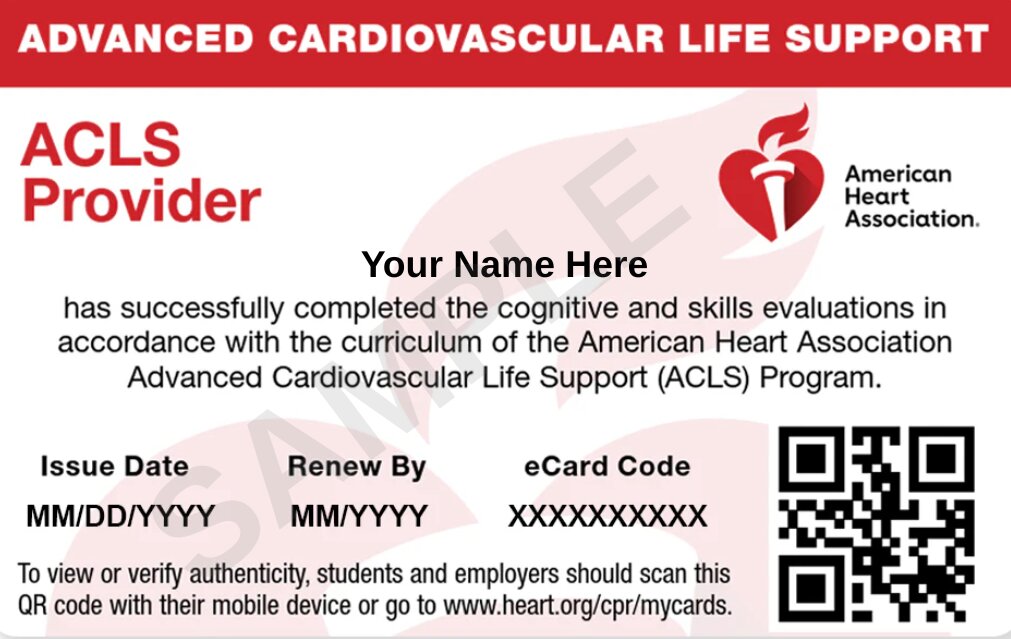
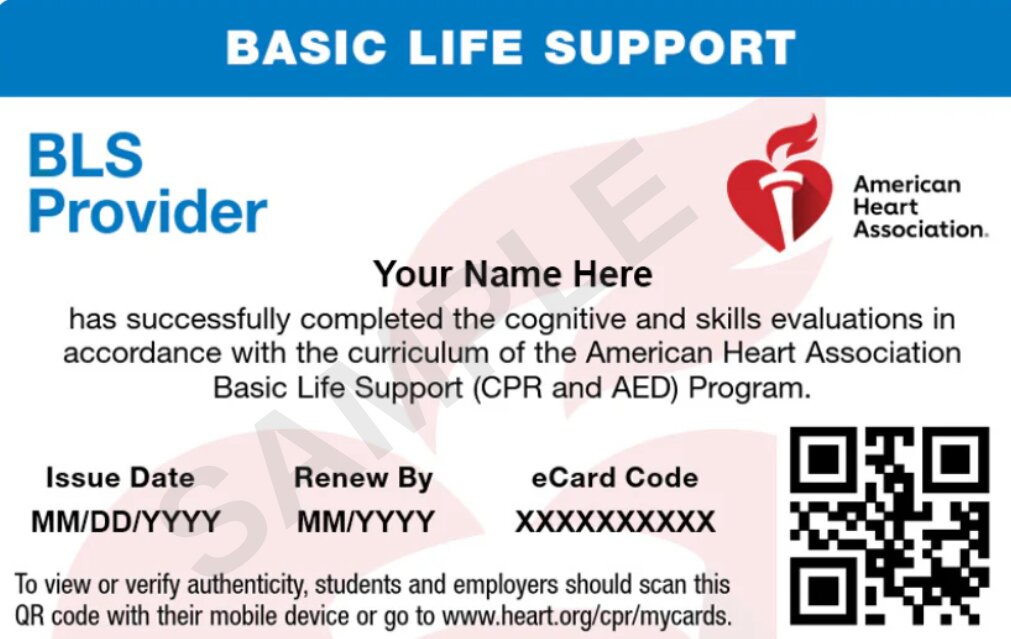
The BLS exam is part of the AHA BLS Provider Course, which prepares healthcare professionals and other trained individuals to recognize life-threatening emergencies and provide immediate care. Depending on the course format, students complete a written or online knowledge assessment and demonstrate their CPR and AED skills during a hands-on skills evaluation. Successfully completing the required assessments is necessary to receive an AHA BLS Provider eCard.
Overview of AHA BLS Exam
Here is a quick breakdown of the exam:
| Exam detail | Requirement |
| Number of questions | 25 |
| Question format | Multiple choice |
| Minimum passing score | 84% |
| Correct answers required | 21 out of 25 |
| Assessment method | Written or online exam, depending on course format |
| Additional requirement | Successful hands-on skills assessment |
Important: The 25-question format applies to the traditional instructor-led written exam. AHA HeartCode BLS uses an adaptive online learning and assessment process instead of requiring students to take the same separate 25-question written exam during their hands-on skills session.
What Types of Questions Are on the AHA BLS Exam?
The AHA BLS exam includes multiple-choice questions that evaluate your knowledge of basic life support procedures and emergency response. Many questions use real-life scenarios to determine whether you can recognize an emergency, select the correct intervention, and follow the recommended sequence of care.
The main topics covered in the BLS written exam include:
1. High-Quality CPR
Questions about high-quality CPR evaluate your understanding of effective chest compressions and rescue breathing. You should understand:
- Recommended adult chest compression rate of 100–120 compressions per minute.
- Adult compression depth of at least 2 inches (5 cm), while avoiding excessive depth.
- Allowing complete chest recoil after each compression.
- Minimizing interruptions in chest compressions.
- Providing effective rescue breaths without excessive ventilation.
2. Adult, Child, and Infant CPR
You may encounter questions about differences in CPR techniques for adults, children, and infants.
Study the following concepts:
- Correct hand or finger placement for chest compressions.
- Compression-to-ventilation ratios.
- One-rescuer and two-rescuer CPR.
- Appropriate compression depth for different age groups.
- When to provide rescue breathing.
3. Automated External Defibrillator (AED) Use
AED questions assess your knowledge of how to use an automated external defibrillator during cardiac arrest.
Important topics include:
- When to apply an AED.
- Correct AED pad placement.
- Following AED voice prompts.
- Ensuring everyone is clear before delivering a shock.
- Immediately resuming CPR after a shock or no-shock recommendation.
4. Airway Management and Rescue Breathing
The exam also evaluates your understanding of airway management and ventilation techniques.
You should review:
- Opening the airway using the head-tilt/chin-lift technique.
- Providing rescue breaths using a barrier device.
- Using a bag-mask ventilation device.
- Recognizing ineffective ventilation.
- Providing appropriate breaths for adults, children, and infants.
5. Choking and Foreign-Body Airway Obstruction
Questions about choking assess your ability to recognize and respond to mild and severe airway obstruction.
Review how to respond to choking emergencies involving:
- Conscious adults.
- Conscious children.
- Infants.
- Unresponsive individuals with suspected foreign-body airway obstruction.
6. Team-Based Resuscitation
BLS training also covers effective communication and teamwork during resuscitation.
You should understand:
- Assigning responsibilities to team members.
- Coordinating chest compressions and ventilation.
- Communicating clearly during an emergency.
- Switching compressors to maintain effective CPR.
- Following instructions from the team leader.
These topics reflect the core knowledge and skills taught in the AHA BLS Provider Course.
What Is the Passing Score for the AHA BLS Exam?
The minimum passing score for the traditional AHA BLS written exam is 84%. Since the exam contains 25 questions, you must answer at least 21 correctly to pass.
For example:
| Correct answers | Score | Result |
| 25/25 | 100% | Pass |
| 24/25 | 96% | Pass |
| 23/25 | 92% | Pass |
| 22/25 | 88% | Pass |
| 21/25 | 84% | Pass |
| 20/25 | 80% | Below passing score |
| 19/25 | 76% | Below passing score |
You do not need to answer every question correctly. However, you must reach the minimum required score and successfully complete the applicable hands-on skills assessment to receive your BLS Provider certification.
Is the AHA BLS Exam Multiple Choice?
Yes. The traditional AHA BLS Provider Course written exam consists of 25 multiple-choice questions. Each question presents several possible answers, and you must select the best answer based on BLS guidelines and emergency response procedures.
Some questions test your understanding of specific CPR techniques, while others present emergency scenarios that require you to identify the appropriate next step.
For example, you might encounter a question about what to do when an adult suddenly collapses, how to respond when an AED advises a shock, or when to resume chest compressions.
Understanding the reasoning behind BLS procedures is more useful than simply memorizing answers.
Is the AHA BLS Exam Difficult?
The AHA BLS exam is generally manageable if you understand the course material and practice the recommended emergency response procedures. However, some questions can be challenging because they test your ability to apply BLS knowledge rather than simply recall definitions.
The areas students should pay particular attention to include:
- Differences between adult, child, and infant CPR.
- One-rescuer versus two-rescuer CPR.
- Correct compression-to-ventilation ratios.
- AED operation and safety precautions.
- Airway management and rescue breathing.
- Recognizing and responding to choking.
The practical skills assessment is equally important. Knowing the correct answer on a written exam does not automatically mean you can perform CPR correctly during an emergency.
How to Prepare for the AHA BLS Exam
Preparing for the AHA BLS exam becomes easier when you combine theoretical learning with practical skills practice.
Follow these preparation tips:
- Review the BLS Provider Manual: Study the course material and understand the recommended CPR procedures.
- Practice CPR techniques: Learn the correct compression rate, depth, hand placement, and chest recoil.
- Understand AED operation: Practice the steps involved in applying AED pads, following prompts, and delivering a shock safely.
- Study different age groups: Understand the differences between adult, child, and infant CPR.
- Review emergency scenarios: Practice identifying the appropriate response to cardiac arrest, choking, and respiratory emergencies.
- Practice hands-on skills: Work with CPR manikins and AED training equipment to develop confidence.
- Review incorrect answers: Identify topics you find difficult and revisit those sections before your assessment.
Remember that BLS certification requires more than passing a written examination. You must also demonstrate the required practical skills according to your course format.
Does the AHA BLS Exam Have a Time Limit?
The AHA does not mandate a universal time limit for completing the traditional BLS written exam. The instructor or Training Center determines the time allowed for the examination.
The online assessment process can also differ depending on the course format. For example, HeartCode BLS incorporates cognitive assessment into its adaptive online learning program.
Therefore, check with your instructor or Training Center about the examination format and time requirements before taking the course.
Can You Retake the AHA BLS Exam If You Fail?
Yes. Students who do not achieve the required passing score or demonstrate the necessary skills receive remediation according to the applicable AHA course requirements.
Remediation helps students identify knowledge gaps, review incorrect concepts, and improve their practical CPR performance. Your instructor or Training Center can explain the applicable retesting procedures.
You must satisfy the course’s written assessment and skills requirements before receiving your BLS Provider eCard.
Get Ready for Your AHA BLS Exam With Proper Training
Passing the AHA BLS exam requires an understanding of CPR techniques, AED operation, airway management, rescue breathing, and team-based resuscitation. Although the traditional written exam contains only 25 questions, you must also demonstrate that you can perform essential life-saving skills correctly. If you are preparing for your BLS certification, enrolling in an AHA BLS course can help you develop the knowledge and practical skills needed to respond confidently during cardiac and respiratory emergencies. Look for a course that combines convenient learning options with hands-on CPR and AED skills practice.
If you are preparing for your BLS certification in California, enroll in an AHA BLS course through CPR Classes California. Our flexible training options combine convenient online learning with a short, in-person skills session, making it easier for busy healthcare professionals and other individuals to complete their training. We also offer AHA ACLS and PALS courses to help you develop essential emergency response skills and earn nationally accepted AHA certification.
Frequently Asked Questions About the AHA BLS Exam
How many questions can you get wrong on the AHA BLS exam?
You can get up to four questions wrong on the traditional 25-question AHA BLS exam. You need at least 21 correct answers, equivalent to an 84% passing score.
Is the AHA BLS exam open book?
The traditional AHA BLS written exam is open-resource. However, students must follow the instructor’s examination rules and cannot use the open-resource format as permission to discuss answers with others.
How many questions are on the AHA HeartCode BLS exam?
HeartCode BLS uses an adaptive online learning and assessment system rather than the traditional 25-question written exam. Students complete the required online cognitive assessment and hands-on skills session.
Do you need to pass both the written exam and skills test for BLS certification?
Yes, the applicable BLS course completion requirements include demonstrating the required knowledge and practical skills. Passing a written examination alone does not qualify you for BLS certification.
How long is AHA BLS certification valid?
An AHA BLS Provider eCard is generally valid for two years. You must complete the appropriate renewal course and meet its requirements to maintain your certification.