Preparing for a CPR certification test can feel stressful, especially when you need certification for work, school, healthcare requirements, or personal preparedness. Many students worry about what will happen if they do not pass on their first attempt. While failing a CPR test can be disappointing, it is important to understand that one unsuccessful attempt does not mean you cannot become certified.
A CPR test is designed to ensure you understand essential lifesaving skills and can perform them correctly. The assessment may include a written knowledge test and a hands-on skills evaluation covering areas such as chest compressions, rescue breaths, CPR sequence, and AED use. Some students struggle with specific techniques or become nervous during the evaluation, but these challenges can often be improved with additional practice and guidance.
This guide explains what happens if you fail the CPR test, common reasons people do not pass, whether you can retake the assessment, possible retake costs, and practical tips to help you prepare for your next attempt.
Can You Fail a CPR Certification Test?
Yes, you can fail a CPR certification test if you do not successfully complete the required knowledge or skills evaluation. Most CPR courses include two main components:
Written Knowledge Test
The written exam evaluates your understanding of important CPR concepts, including:
- Recognizing cardiac arrest
- Performing CPR according to current guidelines
- Understanding compression rate and depth
- Using an automated external defibrillator (AED)
- Responding to choking emergencies
- Knowing the correct steps for adult, child, and infant CPR
Students may fail the written test if they misunderstand key concepts or do not adequately review the course materials.
Hands-On Skills Test
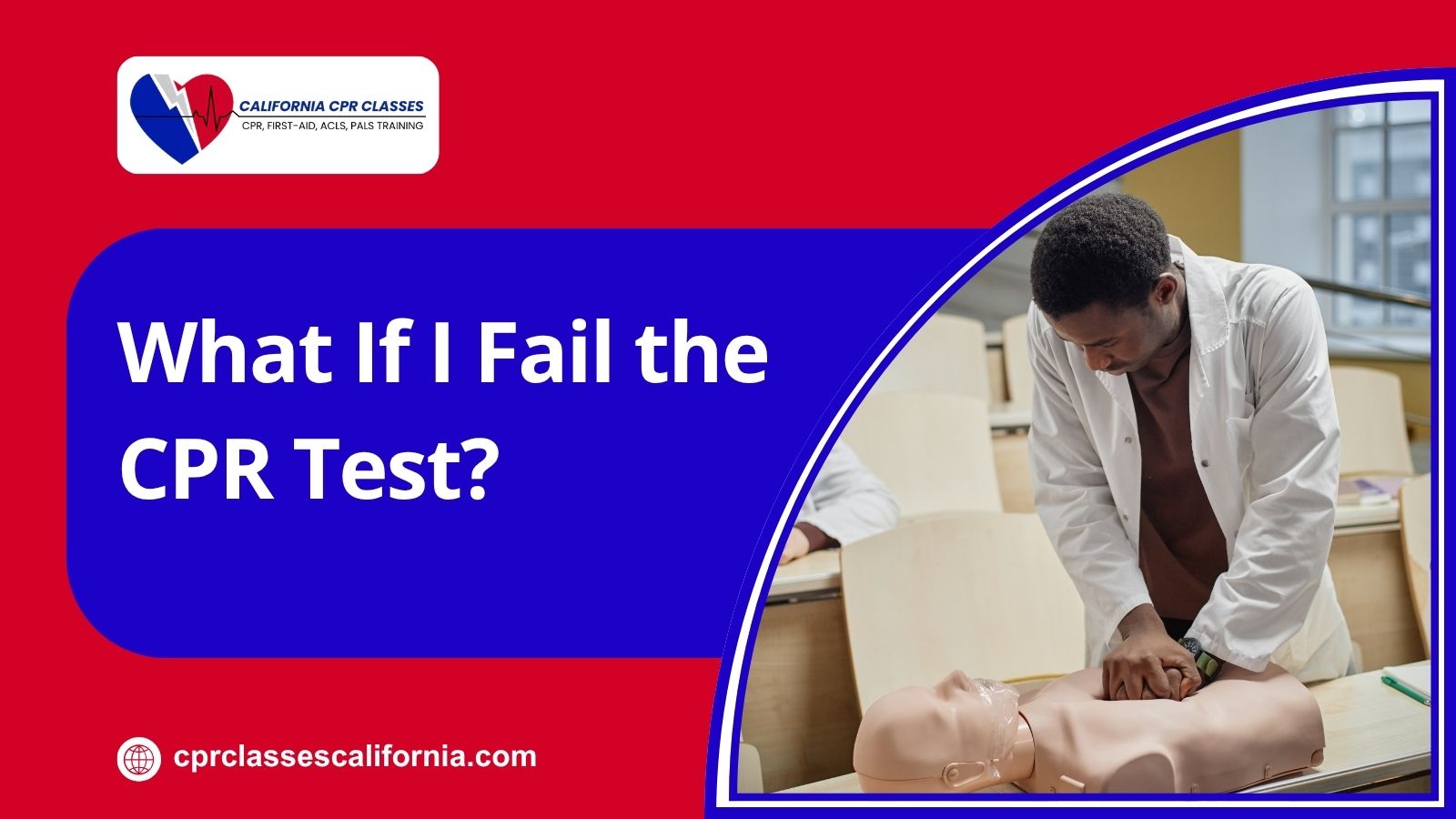
The CPR skills assessment evaluates your ability to perform CPR correctly on a training manikin. Depending on the course, you may need to demonstrate:
- Proper hand placement
- Correct chest compression technique
- Appropriate compression depth and rate
- Full chest recoil between compressions
- Effective rescue breaths
- Correct AED operation
A student who understands CPR concepts but struggles with technique may need additional practice before passing the skills evaluation.
What Happens If You Fail the CPR Test?
Failing the CPR test can be frustrating, especially if you need certification for employment, school, healthcare requirements, or personal preparedness. However, failing a CPR test does not mean you cannot become certified. Most CPR training providers give participants an opportunity to review their mistakes, practice their skills, and retake the assessment.
Here is what typically happens after failing a CPR test:
1. Your Instructor Reviews Your Mistakes
After the assessment, the instructor will usually provide feedback about what went wrong. This may include issues with:
- Incorrect hand placement during chest compressions
- Compression depth or speed errors
- Not allowing full chest recoil
- Missing steps in the CPR sequence
- Incorrect rescue breathing technique
- Improper AED use
Understanding your mistakes helps you focus on the skills that need improvement before retesting.
2. You May Get Additional Practice Time
Many CPR courses allow students to practice again after receiving feedback. You may have the opportunity to repeat skills such as:
- Adult CPR
- Child CPR
- Infant CPR
- Chest compressions
- Rescue breaths
- AED operation
Hands-on practice helps build muscle memory and confidence, making it easier to perform correctly during the next assessment.
3. You May Be Allowed to Retake the Test
In most cases, failing a CPR test does not require you to start the entire course over immediately. Many training providers allow a retest after additional instruction or practice.
Depending on the provider, you may be able to:
- Retake the skills assessment on the same day
- Schedule another testing session
- Repeat only the portion you failed
- Complete additional training before retesting
Retake policies vary, so it is important to check with your CPR certification provider.
4. You Do Not Receive Certification Until You Pass
A CPR certificate is issued only after you successfully complete the required assessments. If you fail the test, your certification will remain incomplete until you meet the course requirements.
Once you pass the retest, you can receive your CPR certification.
Common Reasons People Fail the CPR Test
Many people who fail a CPR test understand the basic concepts but struggle with performing the skills correctly under evaluation. CPR certification tests are designed to ensure participants can confidently perform lifesaving techniques, so small mistakes in technique, timing, or following the correct steps can affect the final result.
Here are some of the most common reasons people fail a CPR certification test:
1. Incorrect Chest Compression Technique
One of the biggest reasons people fail the CPR skills assessment is performing chest compressions incorrectly.
Common mistakes include:
- Placing hands in the wrong position
- Compressing too shallowly
- Compressing too deeply
- Not maintaining the correct compression rate
- Not allowing the chest to fully recoil between compressions
Effective chest compressions require proper technique because they help maintain blood circulation during cardiac arrest. Practicing on a CPR manikin can help improve accuracy and confidence.
2. Forgetting the Correct CPR Sequence
During a CPR test, many participants become nervous and forget important steps in the emergency response process.
Commonly missed steps include:
- Checking whether the person is responsive
- Calling emergency services or asking someone else to call
- Starting CPR quickly
- Following the correct compression and breathing sequence
- Using an AED when available
Knowing the CPR steps in order helps prevent hesitation during the practical assessment.
3. Poor Compression Rate and Rhythm
Maintaining the correct rhythm can be challenging for beginners.
Some common problems include:
- Performing compressions too quickly
- Performing compressions too slowly
- Losing a consistent rhythm during the test
Many students focus so much on remembering the steps that they forget to maintain steady, effective compressions.
Regular practice helps develop the muscle memory needed to maintain the proper pace.
4. Incorrect Hand Placement
Hand placement is a critical part of CPR performance.
Incorrect positioning can reduce the effectiveness of chest compressions and may affect your assessment score.
Common mistakes include:
- Placing hands too high or too low on the chest
- Not positioning hands over the center of the chest
- Incorrect finger or arm positioning
Before the test, practice finding the correct hand position until it becomes natural.
5. Mistakes During Rescue Breaths
For CPR courses that include rescue breathing, improper ventilation is another common reason people struggle.
Common rescue breathing mistakes include:
- Not creating a proper seal
- Giving too much or too little air
- Not checking for visible chest rise
- Forgetting to maintain the correct compression-to-breath ratio
Proper practice helps participants become more comfortable with rescue breathing techniques.
6. Incorrect AED Use
Many CPR tests include an AED demonstration because automated external defibrillators are commonly used during cardiac emergencies.
Participants may lose points by:
- Forgetting to turn on the AED
- Placing AED pads incorrectly
- Not following voice instructions
- Forgetting to ensure everyone is clear before a shock
Practicing AED steps during training makes the process easier to remember.
7. Test Anxiety and Nervousness
Even well-prepared students can make mistakes because of test pressure.
Nervousness can cause people to:
- Forget familiar steps
- Rush through compressions
- Lose focus
- Overthink simple instructions
Staying calm and practicing the entire CPR process from start to finish can improve performance.
8. Not Practicing Enough Before the Assessment
CPR is a hands-on skill, and reading instructions alone is usually not enough.
People are more likely to struggle when they do not practice:
- Compression technique
- Emergency response steps
- Rescue breaths
- AED operation
Repeated practice builds confidence and improves the chances of passing the skills evaluation.
9. Not Listening Carefully to Instructor Feedback
Some participants repeat the same mistakes because they do not focus on the instructor’s corrections.
Before retaking the CPR test, pay attention to:
- What specific skills you missed
- How your technique needs to change
- Which steps you forgot
Instructor feedback is one of the most valuable tools for improving your performance.
10. Rushing Through the Test
Trying to complete the CPR assessment too quickly can lead to avoidable errors.
Common rushing mistakes include:
- Skipping steps
- Poor compression quality
- Forgetting safety checks
- Missing important instructions
The goal of the CPR test is not speed alone; it is demonstrating safe and effective technique.
Does Failing Mean You Don’t Get Certified?
Yes, if you fail the CPR test, you typically will not receive your CPR certification until you successfully complete the required assessments. However, failing the test does not mean you are permanently unable to become certified.
CPR certification providers understand that learning emergency response skills takes practice. If you do not pass on your first attempt, most providers give you an opportunity to improve your skills, receive instructor feedback, and retake the assessment.
Can You Retake the CPR Test?
Yes, you can usually retake the CPR test if you do not pass on your first attempt. Failing a CPR certification exam does not mean you have to start over or that you cannot become certified. Most CPR training providers offer students the opportunity to review their mistakes, practice their skills, and complete a retest.
The purpose of a CPR test is to make sure you can safely perform lifesaving skills, not to prevent people from earning certification. If you need another attempt, your training provider can help you identify areas that need improvement before your retest.
How Many Times Can You Retake a CPR Test?
There is no universal limit on how many times you can retake a CPR test. The number of attempts allowed depends on the CPR training provider, certification organization, course type, and their individual retesting policies.
Many reputable CPR training providers understand that students learn at different speeds and provide additional opportunities to practice and demonstrate their skills. For example, some established providers, such as CPR Classes California and CPR VAM, offer unlimited attempts for students who need additional practice before successfully completing their CPR skills evaluation. However, other training providers may set a specific limit on retest attempts or require students to complete additional training after multiple unsuccessful attempts.
Before enrolling in a CPR certification course, it is important to review the provider’s retest policy, so you understand how many attempts are available and whether additional fees or training requirements apply.
Do You Have to Pay Again After Failing a CPR Test?
Whether you have to pay again after failing a CPR test depends on the CPR training provider’s retake policy. Some providers include free retesting and unlimited attempts as part of their course fee, while others may charge additional fees for another assessment, extra practice sessions, or course renewal. For example, CPR Classes California and CPR VAM allow students to retake their CPR assessment without paying an additional retake fee and provide unlimited attempts until they successfully complete the required skills evaluation.
However, not all CPR providers follow the same policy. Some organizations may require payment for additional instructor time, a new skills evaluation, or repeating the entire course after unsuccessful attempts. Before enrolling in a CPR certification course, it is important to ask about retake fees, the number of allowed attempts, and whether additional practice is included.
Tips to Pass Your CPR Retest
Passing your CPR retest requires focused practice and confidence. Use your first attempt as a learning experience and improve the areas where you struggled.
Here are some tips to pass your CPR retest:
- Review your mistakes: Ask your instructor for feedback and focus on improving weak areas like compression technique, CPR steps, or AED use.
- Practice hands-on skills: Spend extra time practicing chest compressions, rescue breaths, and AED operation on a CPR manikin.
- Remember the CPR sequence: Practice the correct order of emergency response steps so you can perform them confidently.
- Focus on compression quality: Maintain proper hand placement, compression depth, rate, and full chest recoil.
- Stay calm during the test: Avoid rushing, listen carefully to instructions, and trust your preparation.
- Use retake opportunities: Providers like CPR Classes California and CPR VAM offer unlimited attempts without additional retake fees, allowing students more chances to practice and pass.
Is the CPR Test Difficult?
The CPR test can be challenging for beginners, but it is generally not considered difficult if you prepare and practice properly. The assessment is designed to make sure you understand CPR procedures and can perform lifesaving skills correctly, not to trick you or make you fail.
Most people find the hands-on skills test more challenging than the written portion because it requires performing CPR techniques while following the correct steps.
Common areas that may feel difficult include:
- Maintaining the correct chest compression depth and rate
- Remembering the CPR sequence under pressure
- Performing rescue breaths correctly
- Using an AED properly
- Staying calm during the skills demonstration
With enough practice, these skills become easier and more natural. Practicing on a CPR manikin, reviewing instructor feedback, and understanding the steps involved can significantly improve your chances of passing.
Ready to Get CPR Certified? Start Your Training Today
Failing a CPR test does not mean you cannot become certified. With additional practice, feedback from your instructor, and a better understanding of where you struggled, you can improve your skills and successfully pass your retest. Choosing a CPR provider with flexible retesting options and proper hands-on training can help you gain the confidence needed to complete your certification and respond effectively during an emergency.
If you are looking for a trusted CPR training provider, CPR Classes California offers comprehensive CPR and BLS certification courses designed to help students learn essential lifesaving skills with confidence. With decades of experience in CPR education and hundreds of thousands of students trained, CPR Classes California provides expert instruction, hands-on practice, and flexible learning options to support students throughout their certification journey. Enroll in a CPR certification course today and gain the skills and confidence needed to respond when someone’s life depends on you.