If you’re renewing your Basic Life Support (BLS) certification in California, you may be wondering whether your course provides Continuing Education Units (CEUs) or continuing education (CE) credits. The answer is it depends. Unlike the certification itself, which follows American Heart Association (AHA) guidelines, CEUs are determined by your profession, the California licensing board, and whether the training provider is approved to issue continuing education credits.
For many healthcare professionals, a standard AHA BLS Renewal course is primarily a certification requirement rather than a continuing education course. Some California licensing boards allow BLS training to count toward license renewal requirements, while others do not award CE credits for BLS renewal. Before enrolling, always verify your licensing board’s policies and confirm whether the course provider offers approved CE credits.
In this blog, we will explain how BLS Renewal CEUs work in California, who may qualify for credits, what factors determine CE eligibility, and how to choose a course that meets both certification and professional licensing requirements.
What are CEUs?
Continuing Education Units (CEUs) are educational credits that licensed professionals earn to maintain their certifications or professional licenses. In healthcare, CEUs help ensure providers stay current with updated clinical guidelines, patient safety practices, and professional standards.
Although the terms CEUs, CE credits, contact hours, and continuing education hours are sometimes used interchangeably, they may have different meanings depending on your licensing board.
Healthcare professionals who commonly need continuing education include:
- Registered Nurses (RNs)
- Licensed Vocational Nurses (LVNs)
- Dentists
- Dental Hygienists
- Respiratory Care Practitioners
- Physical Therapists
- Occupational Therapists
- Physician Assistants
- Emergency Medical Technicians (EMTs)
- Other licensed healthcare providers
Maintaining the required continuing education credits is often necessary to renew professional licenses in California.
Does Every BLS Renewal Course Offer CEUs?
No, not every BLS renewal course offers Continuing Education Units (CEUs) or continuing education (CE) credits. While most BLS renewal courses provide an American Heart Association (AHA) BLS Provider certification or another nationally recognized certification, the ability to earn CEUs depends on the training provider, your profession, and your California licensing board.
Whether a BLS renewal course qualifies for CEUs depends on several factors, including:
- Whether the training provider is approved to issue continuing education credits
- Your profession (such as nursing, dentistry, or respiratory therapy)
- The requirements of your California licensing board
- Whether the course meets the board’s continuing education standards
If you need continuing education credits for license renewal, you should confirm in advance that the provider is authorized to offer CE-approved training for your profession.
How Many CEUs Does a BLS Renewal Course Typically Provide?
There is no single CEU value for a BLS renewal course in California. The number of continuing education credits you can receive depends on your profession, your licensing board, the training provider, and the accrediting organization.
For many healthcare professionals, BLS renewal is primarily a certification requirement rather than a continuing education course, meaning it may not provide any CEUs toward professional license renewal. For example, the California Respiratory Care Board specifically states that Basic Life Support (BLS) does not qualify for CE credit for respiratory care practitioners.
However, some professions and accrediting organizations do recognize BLS training for continuing education. The American Heart Association (AHA) offers CE/CME opportunities for eligible BLS courses, but the credits available depend on the learner’s profession and accrediting body rather than the BLS certification itself.
Who Can Earn CEUs from BLS Renewal?
Not every healthcare professional automatically receives CEUs for completing a BLS Renewal course. Eligibility depends on the individual’s profession, the requirements of their California licensing board, and whether the course provider is approved to offer continuing education credits.
Healthcare professionals who may be eligible to earn CEUs from a BLS Renewal course include:
- Registered Nurses (RNs) and Licensed Vocational Nurses (LVNs): Some approved continuing education providers offer BLS courses that may count toward nursing CE requirements when they meet California Board of Registered Nursing (BRN) standards.
- Emergency Medical Technicians (EMTs) and Paramedics: BLS training may be accepted as part of continuing education requirements when it aligns with the standards of the applicable EMS authority or certifying organization.
- Dental Professionals: Dentists and dental hygienists may receive CE credits for CPR/BLS training if the course is approved and recognized by the appropriate dental licensing authority.
- Allied Healthcare Professionals: Physical therapists, occupational therapists, physician assistants, and other licensed healthcare providers may qualify for CE credits if their licensing board or approved CE provider recognizes BLS education.
Are Fully Online BLS Renewal Courses Eligible for CEUs?
Not always. Many California licensing boards require more than online instruction alone. For example, the Dental Hygiene Board of California does not accept a BLS course that is 100% online. To qualify for continuing education, the course must include:
- A live, in-person skills practice session combined with an online portion
- A hands-on skills test
- A written examination
What are the Factors Affecting Your BLS CEU Hours?
The number of CEUs or continuing education (CE) hours you can receive from a BLS Renewal course depends on several factors. There is no standard number of CEUs assigned to every BLS course in California because continuing education requirements are determined by your profession, licensing board, and the organization approving the course.
The main factors that affect your BLS CEU hours include:
1. Your Profession
Your profession is one of the biggest factors affecting whether you can earn CEUs from a BLS renewal course. Different healthcare occupations have different continuing education requirements.
For example:
- Registered Nurses (RNs)
- Licensed Vocational Nurses (LVNs)
- Dentists
- Dental Hygienists
- Physicians
- Physician Assistants
- EMTs and Paramedics
- Physical and Occupational Therapists
Each profession follows its own licensing regulations, so a course that qualifies for one profession may not qualify for another.
2. California Licensing Board Requirements
Every California licensing board establishes its own continuing education policies. Some boards allow approved BLS courses to count toward license renewal, while others consider BLS a required certification rather than continuing education.
Before enrolling, review your licensing board’s renewal requirements to determine whether BLS CE credits are accepted.
3. Training Provider Approval
Not every BLS training provider is authorized to issue continuing education credits. Even if the provider offers an official American Heart Association (AHA) BLS Renewal course, CEUs are only available if the provider has the appropriate continuing education accreditation for your profession.
Always verify that the provider can issue a CE certificate if you need continuing education credits.
4. Course Format
The format of your BLS renewal course can also affect CE eligibility.
Common course formats include:
- Instructor-led classroom training
- Blended learning (such as AHA HeartCode® BLS with a hands-on skills session)
- Hybrid training
Some California licensing boards require a live skills assessment before awarding CE credit, while others have additional course requirements.
5. Accrediting Organization
Continuing education credits are often issued through accredited organizations rather than the certification program itself. Depending on your profession, CE credit may be approved through organizations such as nursing, dental, or EMS accrediting bodies.
The accrediting organization determines whether your CE certificate is accepted for license renewal.
6. Course Content and Instruction Time
The number of continuing education hours awarded may also depend on the scope and duration of the course. Some licensing boards evaluate the educational content and instructional time before determining how many CE hours can be claimed.
7. Employer or Workplace Requirements
Some healthcare employers require employees to maintain an active BLS certification but do not require CEUs for employment. Others may reimburse only CE-approved courses or encourage employees to complete continuing education that satisfies both certification and licensing requirements.
Steps to Earn Your BLS Renewal CEUs
If you need Continuing Education Units (CEUs) or continuing education (CE) credits when renewing your Basic Life Support (BLS) certification, it’s important to choose the right course and follow your licensing board’s requirements. Because CE eligibility varies by profession, following these steps can help ensure your BLS renewal satisfies both your certification and continuing education obligations.
Here are the steps to earn your BLS renewal CEUs:
1. Review Your Licensing Board’s CE Requirements
Before enrolling, check the continuing education requirements established by your California licensing board. Confirm whether your profession accepts BLS renewal for CE credit and whether there are any restrictions on the course format or provider.
2. Choose an Approved BLS Renewal Provider
Select an American Heart Association (AHA) Training Center or another provider authorized to issue continuing education credits for your profession. Not every BLS provider is accredited to award CEUs, so verify this before registering.
3. Complete the Required BLS Renewal Course
Finish all required course components. Depending on the training format, this may include:
- Self-paced online learning (such as HeartCode® BLS)
- Instructor-led classroom training
- A blended learning program that combines online coursework with a hands-on skills session
4. Successfully Complete the Skills Evaluation
For AHA BLS renewal, you must successfully demonstrate your CPR and emergency response skills. If you’re taking HeartCode® BLS, you’ll need to complete the required hands-on skills session with an AHA Instructor or an approved Voice-Assisted Manikin (VAM) before receiving your BLS Provider Card.
5. Receive Your BLS Provider Card
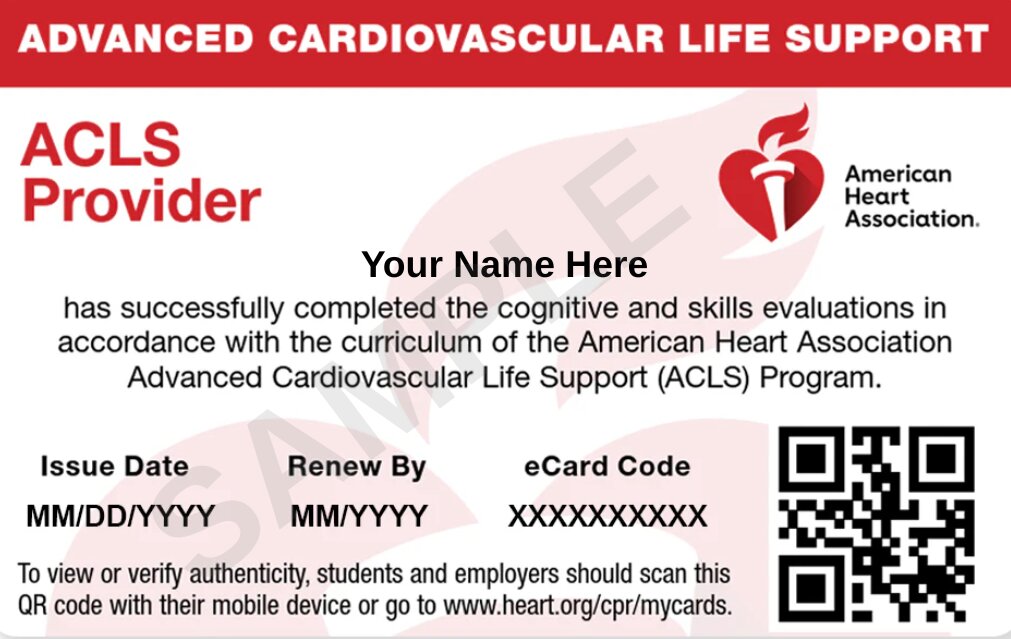
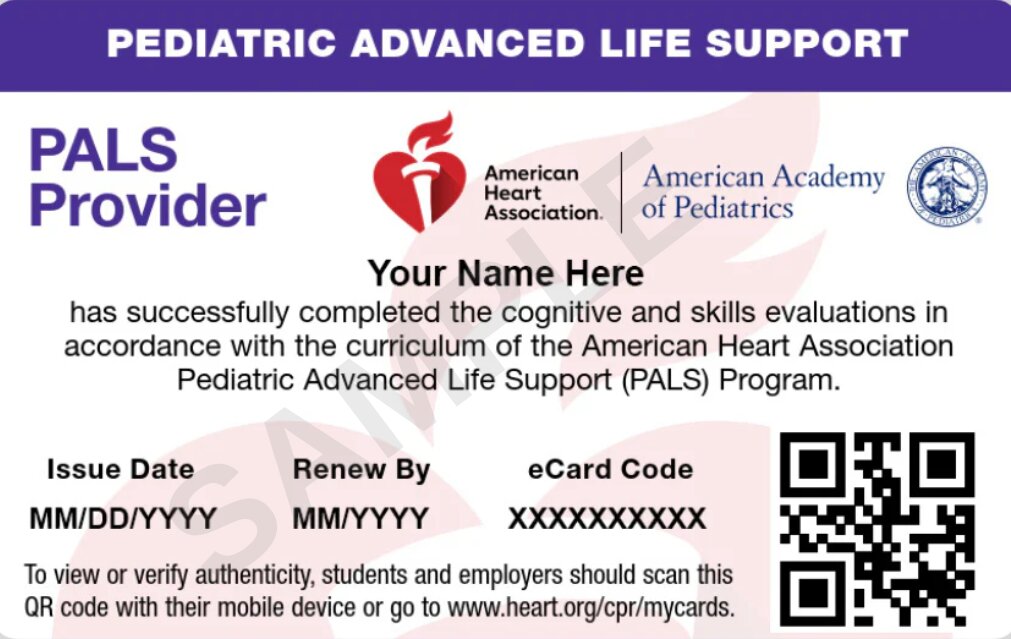
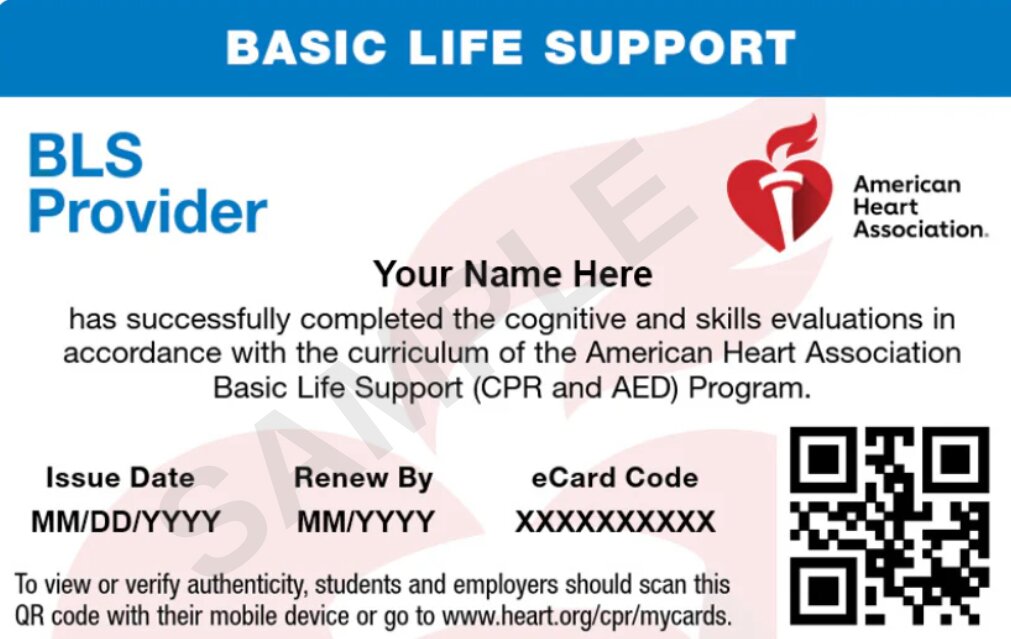
After successfully completing the course and skills assessment, you’ll receive your official AHA BLS Provider eCard, which serves as proof of certification.
6. Claim Your CE Credits (If Available)
If your course offers continuing education, you may need to complete an evaluation or claim process before your CE certificate is issued. For eligible AHA courses, learners typically access their online account, complete the required evaluation, and submit their CE claim to receive their certificate.
7. Download and Save Your CE Certificate
After claiming your continuing education credits, download and save your CE certificate along with your BLS Provider Card. Keep both documents for your records, as your employer or licensing board may request proof during credentialing or license renewal.
8. Maintain Your Records for License Renewal
Store your certification and CE documentation in a secure location until your next renewal cycle. Having organized records can simplify the license renewal process and help you respond quickly if you’re selected for a continuing education audit.
Why CEUs Matter During BLS Renewal
For many healthcare professionals, renewing a Basic Life Support (BLS) certification is about more than maintaining a valid provider card. If your profession requires Continuing Education Units (CEUs) or continuing education (CE) credits, choosing a BLS renewal course that offers approved CE credit can help you meet your license renewal requirements while reinforcing essential lifesaving skills.
Below are some of the reasons CEUs matter during BLS renewal:
Helps Maintain Your Professional License
Many California healthcare licensing boards require professionals to complete a certain number of continuing education hours to renew their licenses. If your licensing board recognizes BLS renewal for CE credit, the course can contribute toward meeting your renewal requirements and reduce the need for additional continuing education courses.
Keeps Your Clinical Skills Up to Date
CPR and emergency cardiovascular care guidelines are periodically updated to reflect the latest evidence-based practices. BLS renewal helps healthcare professionals refresh essential skills such as:
- High-quality CPR
- Automated External Defibrillator (AED) use
- Adult, child, and infant resuscitation
- Team-based resuscitation
- Relief of choking emergencies
When CE credit is awarded, it also demonstrates your commitment to ongoing professional development and clinical competency.
Supports Career Advancement
Many employers value healthcare professionals who actively maintain both their certifications and continuing education. Completing a CE-approved BLS renewal course can strengthen your professional credentials and support career opportunities in hospitals, clinics, dental practices, long-term care facilities, and emergency medical services.
Meets Employer Credentialing Requirements
Most healthcare employers require an active American Heart Association (AHA) BLS Provider Card as a condition of employment. While employers may not specifically require CEUs for BLS renewal, earning continuing education credit at the same time can help you satisfy both workplace expectations and professional licensing obligations more efficiently.
Saves Time and Simplifies License Renewal
If your profession allows BLS renewal to count toward continuing education, you can maintain your certification and earn eligible CE credits through a single course. This can simplify the license renewal process by allowing you to fulfill multiple requirements at once.
Demonstrates a Commitment to Quality Patient Care
Continuing education is designed to help healthcare professionals stay informed about current standards of care and improve patient outcomes. By participating in CE-approved BLS renewal training, you demonstrate your commitment to lifelong learning, patient safety, and high-quality emergency care.
Tips for Efficient CEU Management
Managing your Continuing Education Units (CEUs) effectively can make license renewal much easier and help you avoid last-minute stress. Whether you’re a nurse, dentist, EMT, or another licensed healthcare professional in California, staying organized ensures you remain compliant with your licensing board’s continuing education requirements.
Here are some practical tips to help you manage your CEUs efficiently:
Keep Track of Your CE Credits
Maintain a record of every continuing education course you complete, including:
- Course title
- Date of completion
- Number of CE hours earned
- Training provider
- Certificate of completion
Keeping your records organized makes it easier to verify your CE history during license renewal or an audit.
Understand Your Licensing Board’s Requirements
Each California licensing board has different continuing education requirements. Review your board’s guidelines regularly to understand:
- Total CE hours required for renewal
- Approved course providers
- Acceptable course formats
- Any limits on specialty or mandatory courses
Knowing these requirements helps you choose courses that count toward your license renewal.
Plan Your CEUs Throughout the Renewal Cycle
Instead of waiting until your license is about to expire, spread your continuing education over your renewal period. Completing a few courses each year helps you:
- Avoid last-minute scheduling conflicts
- Reduce the risk of missing renewal deadlines
- Better retain new knowledge and skills
Planning ahead also gives you more flexibility when choosing courses.
Save Digital and Printed Copies of Your Certificates
After completing a CE-approved course, download your certificate immediately and store it securely.
Consider keeping:
- A digital folder on your computer or cloud storage
- A printed copy in your professional records
- Backup copies in case documentation is requested during an audit
Maintaining organized records can save significant time during license renewal.
Choose Approved CE Providers
Always verify that your training provider is authorized to issue continuing education credits recognized by your California licensing board. Completing a course through an unapproved provider may result in credits that cannot be applied toward your license renewal.
Combine Certification Renewal with Continuing Education
When possible, choose certification courses, such as BLS, ACLS, or PALS renewal, that also offer eligible CE credits. This allows you to maintain required certifications while earning continuing education hours through the same training, when permitted by your licensing board.
Monitor Your License Renewal Deadline
Mark your license expiration date and CE completion deadline on your calendar. Setting reminders several months in advance gives you enough time to complete any remaining continuing education requirements before renewal.
Verify CE Credit Before Enrolling
Before registering for any BLS renewal course, ask the provider:
- How many CE hours are awarded?
- Which professions are eligible?
- Which California licensing boards recognize the credits?
- Will a CE certificate be provided?
Verifying this information beforehand helps ensure your time and investment count toward your professional requirements.
Ready to Renew Your AHA BLS Certification in California?
Renewing your Basic Life Support (BLS) certification in California is important for maintaining both your professional credentials and lifesaving skills. However, CEUs are not guaranteed with every BLS renewal course and depend on your profession, the California licensing board, and the training provider’s approval. Before enrolling, verify your licensing requirements and confirm whether the course offers eligible CE credits. Choosing the right AHA-authorized BLS renewal course helps you stay certified, meet license renewal requirements, and continue providing high-quality patient care.
When it’s time to renew, CPR Classes California, powered by CPR VAM, makes the process simple and convenient. Our AHA-authorized BLS Renewal courses feature a flexible blended learning format, allowing you to complete the online portion at your own pace before attending a streamlined hands-on skills session. With advanced Voice-Assisted Manikins (VAMs), convenient training locations, and same-day AHA eCards upon successful completion, you can renew your certification efficiently and get back to what matters most, providing exceptional patient care.